
●Inverter containers convert direct current from batteries into alternating current, enabling energy use in buildings and grid support.
●The MEGA ESSP Series supports various battery types, allowing flexibility in energy storage solutions for different needs.
●Real-time monitoring systems enhance safety and efficiency by detecting issues early and optimizing energy flow.
●Bidirectional power flow allows the system to charge and discharge energy, responding quickly to grid demand changes.
●Containerized battery systems are mobile and can be expanded easily, making them adaptable to growing energy needs.
The MEGA ESSP Series Inverter Container features a modular design that supports a wide range of battery types. Lithium-ion batteries are the most common choice for utility-scale battery storage. These batteries offer high energy density, long lifespan, and reliable performance. The container can also accommodate lithium iron phosphate and nickel manganese cobalt batteries, providing flexibility for different energy storage needs.
| Category | Types |
|---|---|
| By Chemistry | Lithium-ion |
| Lithium iron phosphate (LFP) | |
| Nickel manganese cobalt (NMC) |
Battery modules are arranged to meet specific voltage and capacity requirements. The selection of battery chemistry affects the efficiency and lifespan of the storage system. Lithium-ion batteries endure many charge-discharge cycles, making them cost-effective for long-term energy storage. The container supports up to 12 strings of 0.5C/1C battery systems, allowing users to scale their energy storage based on demand.
The integrated design of the inverter container enhances the performance of battery storage systems. Batteries, inverters, and control systems are placed within a secure enclosure. This arrangement improves safety, efficiency, and adaptability to different environments. The containerized solution allows for rapid deployment and easy expansion. Businesses can start with a single unit and add more as energy needs grow. The plug-and-expand model supports phased deployment, reducing upfront costs and providing flexibility.
Tip: Containerized battery storage systems are mobile and can be relocated to meet changing energy demands.
Efficient space utilization and compatibility with existing infrastructure are key design considerations. The inverter container uses eco-friendly materials and meets strict safety regulations. Optional air or liquid cooling systems maintain optimal temperature, ensuring reliable operation in various climates.
Control systems play a crucial role in managing battery energy storage containers. The Battery Management System monitors voltage, temperature, and state of charge to ensure safety and balance between cells. The Energy Management System controls charging, discharging, and interaction with the grid. These systems optimize energy flow, prevent failures, and maintain operational stability.
●Battery Management System: Monitors key parameters for safety and longevity.
●Energy Management System: Schedules charging and discharging based on demand and pricing.
●Advanced control algorithms adjust output based on grid demand and renewable energy availability.
The MEGA ESSP Series features user-friendly interfaces, including a 7” device display and configurable 10” EMS and BMS displays. Real-time monitoring and intelligent control enhance the reliability and safety of the inverter container, making it suitable for commercial and industrial energy storage applications.
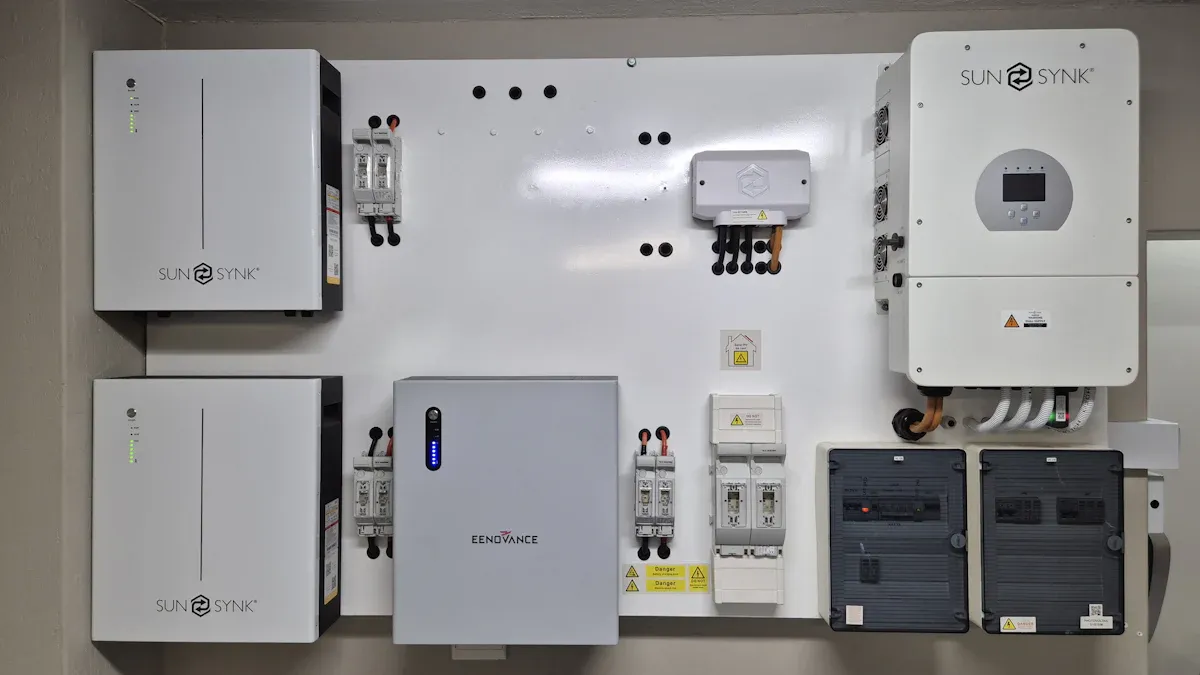
The inverter container plays a central role in converting battery energy into usable power for the grid or a facility. This process begins when the battery stores energy as direct current. The inverter uses advanced electronic switches to change this direct current into alternating current. This transformation involves several steps:
1.The battery stores energy as direct current after charging from solar panels or the grid.
2.The inverter container uses high-speed switches to create a pulsed signal from the direct current.
3.The system shapes this signal into a smooth sine wave, which matches the alternating current used by the grid or building.
4.The converted power is filtered and adjusted to the correct voltage, making it ready for use or export.
This process allows utility-scale battery storage to deliver reliable energy during peak demand or when renewable sources are not available. The MEGA ESSP Series inverter container uses advanced power electronics to ensure high conversion efficiency and stable operation.
Modern battery storage systems require flexibility to both charge and discharge energy. The inverter container enables bidirectional power flow, which means energy can move in both directions between the grid and the battery. This capability supports several important functions:
●In charging mode, the system converts alternating current from the grid or renewable sources into direct current. The battery then stores this energy for later use.
●In discharging mode, the inverter container changes the stored direct current back into alternating current. This energy can then supply the grid or a local facility.
●Bidirectional energy flow allows the system to respond quickly to changes in grid demand. The system can store excess energy when supply is high and release it when demand increases.
The MEGA ESSP Series supports real-time management of charging and discharging. The energy management system monitors the state of charge (SoC) and depth of discharge (DoD) for each battery string. This ensures that the storage system operates efficiently and extends battery life.
Safety and efficiency are critical in battery storage systems. The inverter container includes several layers of protection to prevent electrical hazards and thermal runaway. Key safety features include:
●The battery management system monitors voltage, current, and temperature for each battery module. If the system detects unsafe conditions, it disconnects affected modules to prevent damage.
●The container design includes thermal management systems, such as air or liquid cooling, to control heat and maintain safe operation.
●Fire suppression systems and explosion control measures add extra protection, meeting international safety standards.
Efficiency also plays a major role in the performance of the energy storage system. The MEGA ESSP Series uses advanced power electronics and control systems to maximize energy conversion rates. Typical commercial systems achieve efficiency rates around 85%, while high-performing systems can reach 88% or better. The following table shows efficiency rates for different system types:
| System Type | Efficiency Rate |
|---|---|
| Commercial Systems | 85% |
| High-Performing | 88% or better |
| 2-Hour System | 92-94% |
| 8-Hour System | 89-91% |
The inverter container maintains high operational efficiency even under varying load and environmental conditions. Features such as modularity, advanced cooling, and intelligent control algorithms help the system adapt to different scenarios. The MEGA ESSP Series demonstrates reliable performance in challenging environments, making it a strong choice for commercial and industrial energy storage.
Note: Real-time monitoring and intelligent management by the energy management system and battery management system help optimize energy flow, protect battery health, and ensure stable operation.
Battery integration is essential for the performance and reliability of battery energy storage systems. The energy management system determines the best times to charge or discharge the battery based on grid conditions and energy prices. This process helps optimize energy flow and supports grid stability. The battery management system tracks voltage, current, and temperature for each battery module. It prevents overcharging and overheating, which protects the battery and extends its lifespan. Proper integration also involves matching all components to the peak power the system can deliver. Protective devices, such as circuit breakers and fuses, disconnect the system during overcurrent events. Regular maintenance and inspections help identify worn cables or corroded connections before they cause failures. Environmental controls keep the battery at the right temperature and humidity, which prevents unexpected power spikes and ensures safe storage.
System monitoring is a key feature in modern battery storage systems. Flexible sensing technology allows real-time monitoring of battery health and performance. This technology is thin, ductile, and does not interfere with battery operation. The integration of artificial intelligence improves predictive capabilities by analyzing complex data. Real-time monitoring and visualization of system performance help operators detect early signs of failure, such as thermal stress in inverter components. Automated alerts notify users of anomalies, allowing for proactive maintenance. High-frequency data logging meets warranty requirements and supports long-term storage health. Real-time monitoring is fundamental for preventing failures and maintaining the reliability of utility-scale battery storage.
Note: Proactive monitoring helps operators catch potential problems before they lead to significant failures, ensuring continuous power delivery.
Adaptability increases the value of battery storage systems. The MEGA ESSP Series offers multiple working modes, allowing the system to adjust to different operational scenarios. This flexibility enables the storage system to deliver various services, such as energy arbitrage and frequency regulation, based on grid needs. The system can participate in several markets at once, which maximizes economic returns. The user interface features a 7-inch device display and configurable 10-inch displays for the energy management system and battery management system. These displays make it easy to monitor and control the storage system in real time. Adaptability ensures the system can operate efficiently in diverse environments, from urban centers to remote sites.
Inverter containers are essential for battery energy storage systems. Advanced solutions like the MEGA ESSP Series offer integrated energy management, high efficiency, and near-instant backup power transition. The table below shows how the MEGA ESSP Series compares to traditional options:
| Feature | MEGA ESSP Series | Traditional Solutions |
|---|---|---|
| Integrated Energy Management | Yes | No |
| Efficiency | 94% | Typically lower |
| Safety Standards | Automotive-grade | Varies |
| Operating Temperature Range | 14℉ – 122℉ | Limited range |
| Backup Power Transition | Near-instantaneous | Slower transition |
| Battery Integration | Integrated | Sourced separately |
Common misconceptions include:
●Battery cells are only one part of a complete system.
●System performance depends on architecture and control, not just cell chemistry.
●Engineering aspects like stability and thermal management are crucial.
When evaluating inverter containers, consider capacity, efficiency, installation ease, durability, and application suitability. These features help ensure reliable energy storage for commercial and industrial needs.
An inverter container converts direct current from batteries into alternating current for grid or facility use. It also manages the flow of energy between the battery and the grid.
Yes. The MEGA ESSP Series supports various battery chemistries, including lithium-ion and lead-acid. This flexibility allows users to choose the best option for their specific needs.
The system uses advanced monitoring for voltage, temperature, and current. It includes thermal management and fire suppression features. These layers of protection help prevent electrical hazards and ensure safe operation.
●Detects early signs of failure
●Improves battery health
●Supports proactive maintenance
●Ensures reliable power delivery
Yes. The container has a C3 anti-corrosion grade and IP54 protection. It operates efficiently in challenging climates and at high altitudes, making it suitable for many locations.
.png "English")
.png "中文")
.png "Arab")
.png "Spain")
.png "Portugal")


